Showing posts with label big oil. Show all posts

Apr 20, 2016

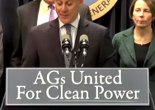
The Climate Inquisition: Attorney Generals Go Rogue

No matter what voters say in the upcoming US election, a coalition of Attorney Generals intend to push for 'even more aggressive' climate action.
click image to read full blog post
read the rest here

.
.

Oct 14, 2015

Hoesung Lee: New IPCC Leader

The new IPCC chairman is an economist who, ironically, began his career with oil giant Exxon.
click image to read full blog post
read the rest here

.
.

Dec 2, 2013

Independent Greenpeace? Never Mind

Greenpeace makes a show of rejecting government and corporate money. But it’s close pals with the WWF – which gets enormous funding from exactly those sources.

click image to read full blog post

read the rest here

.
.

Jun 27, 2013

Dumb Energy vs Smart Energy

Supplying electricity to a typical family for 12 hours requires the pedal power of 80 elite cyclists. The same amount of electricity can be purchased from the grid for under $5.

Read the rest here.
This blog has relocated. You can sign up to receive an e-mail each time a new post is added under the "Email subscription" bar a little below the photo.

NoFrakkingConsensus has a Facebook page.

Jun 11, 2013

The Open Letter to American Universities

Eminent individuals are urging US educators to encourage a genuine campus debate about fossil fuels.

Read the rest here.
This blog has relocated. You can sign up to receive an e-mail each time a new post is added under the "Email subscription" bar a little below the photo.

NoFrakkingConsensus has a Facebook page.

Jan 27, 2013

The Sierra Club's Broken Moral Compass

The Sierra Club took fossil fuel money. Lots of it. How dare it falsely accuse other people of doing this.

Read the rest here.
This blog has relocated. You can sign up to receive an e-mail each time a new post is added under the "Email subscription" bar a little below the photo.

NoFrakkingConsensus has a Facebook page.

Jun 8, 2012

Masters of Hypocrisy: the Union of Concerned Scientists

A new report funded by big oil and big tobacco has the chutzpah to complain about corporate influence on the climate debate.

Read the rest here.
This blog has relocated. You can sign up to receive an e-mail each time a new post is added under the "Email subscription" bar a little below the photo.

NoFrakkingConsensus has a Facebook page.


May 30, 2012

Der Spiegel Skewers the World Wildlife Fund

A splendid and disturbing investigative feature in Der Spiegel explains why the WWF doesn’t deserve your charitable donations.

Read the rest here.
This blog has relocated. You can sign up to receive an e-mail each time a new post is added under the "Email subscription" bar a little below the photo.

NoFrakkingConsensus has a Facebook page.


Apr 11, 2012

The WWF's Vast Pool of Oil Money

The World Wildlife Fund’s first corporate sponsor was Shell oil – which continued to fund it for the next four decades.

Read the rest here.
This blog has relocated. You can sign up to receive an e-mail each time a new post is added under the "Email subscription" bar a little below the photo.

NoFrakkingConsensus has a Facebook page.


Feb 17, 2012

Big Oil Money for Me, But Not for Thee

The Sierra Club takes fossil fuel money. So does the Nature Conservancy and Rajendra Pachauri’s sustainability conference. So why is the Heartland Institute being torn to pieces for the same behaviour?

Read the rest here.
This blog has relocated. You can sign up to receive an e-mail each time a new post is added under the "Email subscription" bar a little below the photo.

NoFrakkingConsensus has a Facebook page.


Jan 20, 2012

The Keystone pipeline: Reuters doubts the unions, but believes the greens.

Read the rest here.
This blog has relocated. You can sign up to receive an e-mail each time a new post is added under the "Email subscription" bar a little below the photo.

NoFrakkingConsensus has a Facebook page.


Feb 25, 2011

You Doubt Monger, You

When environmentalists organize themselves, fund-raise, and try to spread their message this is considered legitimate democratic activity. Yet the minute climate skeptics do the same we’re accused of being doubt-mongers who manufacture uncertainty in order to mislead the public.

Read the rest here.
This blog has relocated. You can sign up to receive an e-mail each time a new post is added under the "Email subscription" bar a little below the photo.NoFrakkingConsensus now has a Facebook page.

.

Feb 14, 2011

It Isn't a Conspiracy - It's Just Money, Fashion & Power

If much of the world were to snap out of it and realize that global warming has been over-hyped, large companies in wealthy and influential sectors of the economy would lose hundreds of billions.

Read the rest here.
This blog has relocated. You can sign up to receive an e-mail each time a new post is added under the "Email subscription" bar a little below the photo.NoFrakkingConsensus now has a Facebook page.

.

Nov 29, 2010

The Royal Society's Big Oil Award

The UK’s Royal Society awarded an Esso Energy medal annually for 25 years. A short time later, when opinions on climate change diverged, the society began painting Esso’s parent company, ExxonMobil, as demon spawn.

Read the rest here.

This blog has relocated. You can sign up to receive an e-mail each time a new post is added under the "Email subscription" bar a little below the photo.

NoFrakkingConsensus now has a Facebook page.

Jun 4, 2010

BP, Greenpeace & the Big Oil Jackpot

In what passes for debate about climate change one of the most tiresome allegations is that skeptics are lavishly funded by big oil. As a result of this funding, so the argument goes, the public has been confused by those who'll say anything in exchange for a paycheck.

"Follow the money" we're told and you'll discover that climate skeptics are irredeemably tainted. Ergo nothing they say can be trusted. Ergo their concerns, questions, and objections should be dismissed out of hand.

It's therefore amusing that the current oil spill in the Gulf of Mexico is now drawing attention to the close relationship between climate change activists and BP – aka British Petroleum, an entity for which the descriptor "big oil" was surely invented.

According to the Washington Post the green group Nature Conservancy – which encourages ordinary citizens to personally pledge to fight climate change - "has accepted nearly $10 million in cash and land contributions from BP and affiliated corporations over the years."

Gee, didn't Greenpeace build an entire ExxonSecrets website to expose the allegedly diabolical fact that, over a 9-year-period (1998-2006) ExxonMobil donated a grand total of $2.2 million to a conservative think tank?

$10 million versus $2 million. Who do we suppose has the cozier relationship with big oil?

But that's just the beginning. The Washington Post also points out that Conservation International, another green group which insists climate change represents a "profound threat," has "accepted $2 million in donations from BP over the years and partnered with the company on a number of projects."

Funny, Greenpeace doesn't talk about that. Nor does it mention:

  • that BP is funding research into "ways of tackling the world's climate problem" at Princeton University to the tune of $2 million per year for 15 years
  • that BP is funding an energy research institute involving two other US universities to the tune of $500 million – the aim of which is "to develop new sources of energy and reduce the impact of energy consumption on the environment"
  • that ExxonMobil itself has donated $100 million to Stanford university so that researchers there can find "ways to meet growing energy needs without worsening global warming"

The only dollar amounts Greenpeace cites in its explanation of why it decided to launch ExxonSecrets is that measly $2.2 million. Versus 10 + 2 + 30 + 500 + 100. Let's see, which all adds up to…wait for it…$642 million.

If the world is divided into two factions – one that believes climate change is a serious problem and another that thinks human influence on the climate is so minimal it's indistinguishable from background noise – one group has pulled off a bank heist while the other has been panhandling in front of the liquor store.

In the same document in which Greenpeace talks about the ExxonMobil money it chillingly asserts that climate "deniers" aren't entitled to free speech. Why? Because "Freedom of speech does not apply to misinformation and propaganda."

Actually, the big thinkers on the subject have consistently taken the opposite view. John Stuart Mill was adamant that no one has the right to decide what is or is not propaganda on everyone else's behalf. He would have looked Greenpeace in the eye and told it to stop imagining that its own judgment is infallible.

More than a hundred years later Noam Chomsky famously declared that if you don't believe in freedom of expression for opinions you despise you don't believe in it at all.

If Greenpeace would like to have a serious conversation about who, exactly, is spreading misinformation I'm up for that - since it's overwhelming obvious that the big oil jackpot was awarded to those on the Greenpeace side of the debate.

The fact that climate change activists have enjoyed such a powerful funding advantage and yet insisted all the while that the exact opposite was the case is troubling. It tells us a good deal about their intellectual rigour. About their character. And about their ability to distinguish fact from fiction.

If there really is a climate crisis, if our grandchildren's future really is imperiled, these aren't the people to lead us out of the wilderness.


..

UPDATE (June 6): Reader Terry Kesteloot alerted me to the fact that the Greenpeace.org website is apparently infected with a "very low" risk computer virus. The links in this post to Greenpeace's ExxonSecrets FAQ have therefore been replaced with links to a copy of the document that resides at Archive.org (scroll down once the page loads).

If your machine has virus protection, the document may be viewed directly on the Greenpeace website HERE.

..

>> Slurs, smears & money
>> Independent bloggers vs corporate environmentalists
>> Money to burn
>> Shielding climate orthodoxy from free speech

Feb 22, 2010

Independent Bloggers vs Corporate Environmentalists

[desktop wallpaper version available here]


Another day, another smarmy accusation that people who are skeptical of climate change are being funded by a shadowy conspiracy connected in one manner or another to big oil, big coal, big tobacco or - horror of horrors - right-wing think tanks.

These accusations are tiresome. They're ugly. They're almost entirely unsubstantiated. Most of all, they're a waste of time. They amount to shooting the messenger rather than addressing the bleeping message.

So why do they keep getting repeated? I think I've sorted out two reasons. First: the lavishly-funded corporate nature of the environmental movement circa 2010. Second: modern technological wonders such as personal computers and the Internet.

Environmental organizations today bear little resemblance to the shoestring operations of yesteryear. As a book published 14 years ago observed:
While Greenpeace used to be a pair of bell-bottomed blue jeans, today it is more like a three-piece pinstripe suit.
Indeed. In 1971, Greenpeace was an "upstart peace group from Vancouver" that held meetings in a Unitarian church. After it chartered a 30-year-old "creaking fish boat" to protest a US nuclear arms test, it could barely afford to pay for the boat's fuel.

Last month, however, when The Guardian reported that Greenpeace had commissioned a brand new £14 million ($22 million US) mega-yacht, it observed that "cost should not be a problem for the group, which, with nearly three million supporters, is extremely wealthy."

How wealthy? According to publicly-available figures compiled by Climate-Resistance.org, over a 12-year period Greenpeace raised $2.4 billion. That works out to $200 million a year in resources.

If you think that's impressive, take a moment to ponder the fact that the World Wildlife Fund raised $3.1 billion in just six years (2003-2008). Which means that that organization has ready access to half a billion dollars annually.

When you're that big – and that loaded – suddenly everything costs a small fortune. Want to start a new blog? That'll require a series of meetings. You'll need to invite web design folks, IT folks, a contingent of in-house PR people, an ad agency person or two, a corporate strategy person, and probably someone from legal. You'll meet in shiny offices in a fashionable part of town and order-in sandwiches from the pricey, organic, fair-trade café at the end of the street.

Compare and contrast to how independent individuals of utterly modest means from all over the world currently behave. They sign up to a service like Blogger.com (which is owned by Google) and, within a few hours at most, for no cost whatsoever, have launched themselves as a blogger. Alternatively, for well under $10 in hosting fees a month, they can publish their own website.

For no money, therefore, climate skeptics in the early 21st century are in a position to theoretically communicate online with as many people as is Greenpeace. From their basements and their attics, in often non-trendy geographical locations, it isn't their funding that matters - it's their skill sets.

Many skeptical-leaning bloggers have scientific, mathematical, and statistical training - not to mention decades of real-world experience under their belts. Others have been professional communicators (I, myself, am a former print journalist). Some are speed-readers, others have photographic memories. Many, like the folks who rendered the Climategate e-mails fully searchable within a matter of hours, have impressive information technology skills. Some are retired, with plenty of time on their hands. Others devote as many hours to reading and writing about climate issues in a week as they'd otherwise spend on knitting or golf.

From the perspective of environmental organization staffers, research agency employees, and tenured university professors it must appear as though skeptics have access to deep pockets. In the universe those people inhabit, even the simplest tasks can end up as budget line items. There are layers of bureaucracy, paperwork, office politics, and regulations to consider.

For the small and growing army of skeptical climate bloggers, however, none of that applies. The equivalent of a battered fishing boat will do nicely, thank you.

Those vessels are now everywhere. They're being sailed by real people and fueled by grassroots concern, outrage, and passion. And they're not going away.

..

>> Slurs, smears & money

>> Al Gore's tobacco hypocrisy
>> Greenpeace and the Nobel-winning climate report
>> Climate skepticism is free speech
>> Green time capsule: 1970 eco ideas not pretty

Nov 9, 2009

Canada's Tar Sands & Cancer Rates

From this morning's paper: Report casts doubt on MD's claims about Alberta reserve's cancer rates

To some, Dr. John O'Connor is a whistleblower in the finest tradition - calling attention to environmental impacts others would prefer not to think about. To others, he's an activist who has permitted his political zeal to cloud his medical judgment.

It would be interesting to read this report in full. For now, there are two points worth highlighting:

The first, which isn't even hinted at in this news article, is that many of the reservations on which Canada's Native Indian/aboriginal/First Nations (choose your descriptor) folks live are tiny, desolate, and remote. The small size of these communities precludes the development of a vibrant, sustainable economy. This in turn almost always results in high unemployment and is associated with myriad other social ills: high rates of family violence, alcoholism, diabetes, youth suicide and so forth.

The fact that these communities are so remote means that it's virtually impossible to pursue the lifestyle choices associated not only with cancer prevention, but with positive health outcomes overall. Fresh fruit and vegetables are simply not on the menu for large parts of the year. In other words, there are lots of reasons - both nutritional and social - why cancer rates might be higher in these communities.

The second point worth noting is that, when medical officials from two levels of government attempted to verify Dr. O'Connor's allegations of higher-than-expected cancer rates, the doctor declined to cooperate. Reads the news article:
....he “obstructed” efforts by the Alberta Cancer Board and Health Canada to investigate his claims by defying the law and ignoring repeated requests to turn over his clinical evidence in a “timely manner."
This is not the way someone in possession of iron-clad proof of a serious medical problem would be expected to behave. And then there's this:
According to the report, when Dr. O'Connor finally co-operated with public health officials after stalling for close to two years, many of his numbers didn't match up with what he had been saying publicly...
To anti-tar-sands activists, Dr. O'Connor is the hero of a documentary film, a respected spokesperson in a David-and-Goliath struggle against Big Oil, and the victim of a financially motivated witch hunt.

The authors of this report take a different view. They found many of Dr. O'Connors statements to be "inaccurate" and "untruthful".

If I'm reading the news article correctly, it appears that although everyone else in this matter has given permission for the report to be publicly released and publicly discussed by the body that authored it, Dr. O'Connor has withheld his (necessary) permission.

The report concludes that punishing Dr. O'Connor would not serve the public interest. But it does, in careful, muted language suggest that its authors are not impressed by the way he has conducted himself:
The message that Dr. O'Connor and others may take from this review is the need for advocacy to be fair, truthful, balanced and respectful.
..

Jun 19, 2009

Slurs, Smears & Money

The debate about global warming is a nasty one. Anonymous people calling other people "climate criminals" online. Scientists getting watchlisted on Greenpeace's ExxonSecrets website even when they deny categorically any association with any oil company.

Accusations, as we all know, are not proof. Everyone has a right to be presumed innocent - especially when being accused by anonymous individuals on the Internet.

With so many aspersions being cast so casually, separating fact from fiction is difficult. Is it possible some scientists have accepted research funding from oil companies and that their conclusions were improperly influenced? Absolutely. But does that mean all of their work - including research conducted beforehand or ten years later - should be disregarded? Does it mean that nothing they might say is worth listening to?

Hard-core environmentalists frequently advise people like me (who insist on hearing all sides of the global warming debate) to "follow the money." All right then. Let's do that.

Al Gore's speaking fee is $175,000. If financial gain isn't part of his motivation, why doesn't he deliver the same speech for, say, $50,000? That way, audiences inspired by his talk could use the remaining $125,000 to do good things for the environment in their own communities.

Greenpeace (which would receive fewer public donations if it weren't constantly hyping the fragility of the planet) makes a huge deal about the fact that ExxonMobil donated $2.2 million to the Competitive Enterprise Institute think tank between 1998 and 2006. This works out to less than $250,000 annually for nine years. These are, by the way, the only hard numbers in Greenpeace's lengthy ExxonSecrets FAQ.

Let's compare those numbers to the funding received by people whose research happens to align with the theory of global warming. Back in 2000, Daniel Sarewitz observed that the US federal government was spending $1.8 billion annually on the U.S. Global Climate Change Research Program. That's one initiative, in one country, in one year.

On some level, people employed by such programs know they might be out of a job if they all wake up one morning and declare climate change to be a minor phenomenon unworthy of concern. Do we really suppose this fact never influences their research?

Which takes us back to Greenpeace. According to its annual report, it spent $40 million in US dollars on climate-change-related campaigns in 2007, up 11% from the previous year. In the space of two years, then, one environmental group amongst dozens spent $70 million on activities intended to persuade all of us - including climate scientists - that global warming is a crisis.

And it has the nerve to whine about the improper influence Exxon might have exerted when it spent a measly half-million in a similar time frame? 140 to 1. That's the skew we're talking about here. It appears that, when it beats up on little kids in the playground, Greenpeace thinks those kids should have both hands tied behind their back and be blindfolded, too.

It gets worse. In August 2007, Newsweek columnist Robert J. Samuelson, sharply criticized a cover story his magazine had run the previous week:

If you missed NEWSWEEK's story, here's the gist. A "well-coordinated, well-funded campaign by contrarian scientists, free-market think tanks and industry has created a paralyzing fog of doubt around climate change."

Coincidentally, this isn't just a fair summation of the article, it encapsulates nicely Greenpeace's ExxonSecrets FAQ. Trouble is, as Samuelson points out, that narrative is "fundamentally misleading."

There are practical, real-world reasons, writes Samuelson, why advanced economies cannot quickly switch from one kind of energy source to another. Any news story that scapegoats skeptical scientists is "peripheral and highly contrived." He continues:
NEWSWEEK implied, for example, that ExxonMobil used a think tank to pay academics to criticize global-warming science. Actually, this accusation was long ago discredited, and NEWSWEEK shouldn't have lent it respectability. The company says it knew nothing of the global-warming grant, which involved issues of climate modeling. And its 2006 contribution to the think tank, the American Enterprise Institute, was small: $240,000 out of a $28 million budget.) [emphasis added]
The fact that a neutral third party considers allegations of this type less-than-credible hasn't discouraged Greenpeace from using them, to this day, to justify its ExxonSecrets watchlist website. (Like Roman Catholic hardliners with their Index of banned books, climate idealogues appear to consider this list of those-to-whom-thou-shalt-not-lend-thine-ear to be the final word.)

It's time to end this foolishness. Between them, governments, charitable foundations and environmental organizations spend billions - that's a "B" - of dollars each year on research and educational campaigns that start from the premise that life as we know it is endangered by global warming.

The notion that scientific research and public debate has been unduly influenced by Exxon's relatively puny expenditures is a sick joke.

When I was 19, I joined a peace group protesting American cruise missile testing over Canada's north. Back then we'd daydream about a world in which schools were adequately funded while the military was required to hold bake sales.

In the climate debates, one side is, indeed, lavishly funded. The skeptics, meanwhile, are making rice krispie squares.

..